

12.10.2026
Brevik CCS shares lessons from construction and commissioning
Heidelberg Materials has documented key lessons from the final construction and commissioning phases of Brevik CCS in 2024 and 2025. The report provides valuable insights for the planning and execution of future carbon capture and storage (CCS) projects.
The report covers January 2024 to May 2025, a significant period in the development of Brevik CCS. During this time, the project reached mechanical completion in December 2024 and achieved readiness for its first CO2 ship loading on 9 May 2025. The experiences documented during this period offer practical insights into the integration of carbon capture technology at existing industrial facilities.
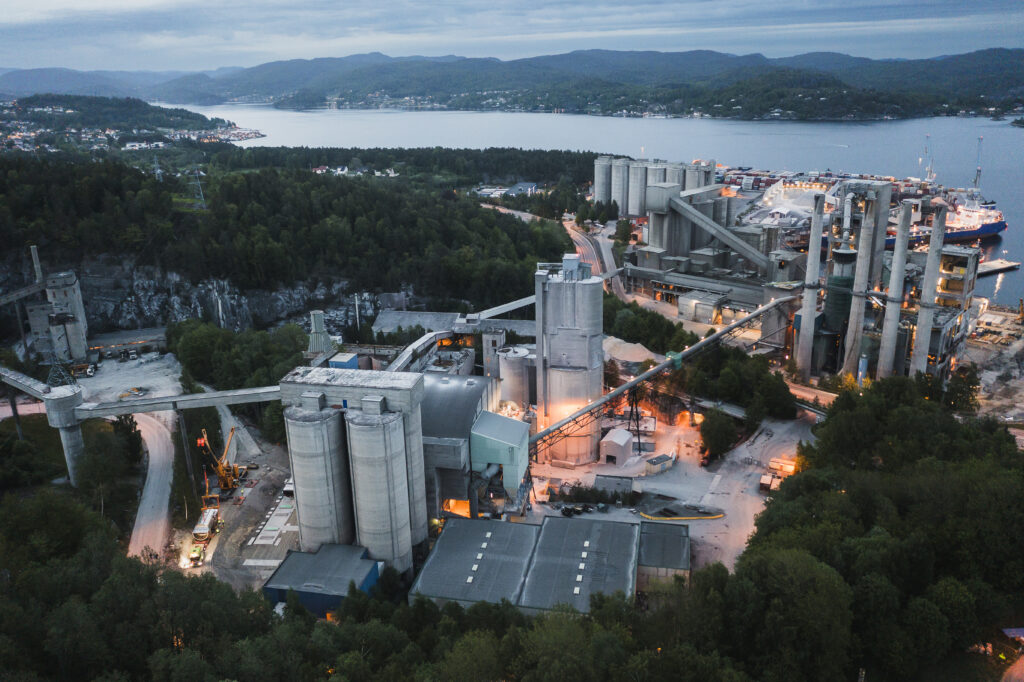
Brevik CCS site.
Clear responsibilities and early planning
One of the main lessons concerns the importance of clearly defined roles, responsibilities and completion criteria. The report identifies challenges related to mechanical completion, coordination between contractors and the transition from construction to commissioning.
Early involvement of experienced personnel from the existing cement plant proved particularly valuable in facilitating integration and resolving operational challenges.
Operator training and technical integration
The report highlights the importance of operator training, including the use of an Operator Training Simulator (OTS) to prepare personnel for commissioning, start-up and operation. Other lessons concern technical documentation, instrument air quality, maintenance systems and the time required for CO2 ship loading operations.
Valuable experience for future CCS projects
The report also addresses cost management, environmental considerations and health and safety. Key recommendations include early planning of maintenance systems, regulatory documentation and access to specialist expertise.
By documenting experiences from the construction and commissioning phases, Heidelberg Materials contributes valuable knowledge to the wider CCS community. These lessons provide a practical foundation for improving planning, reducing risks and strengthening the execution of future industrial carbon capture projects.