
Capture: Oslo CCS
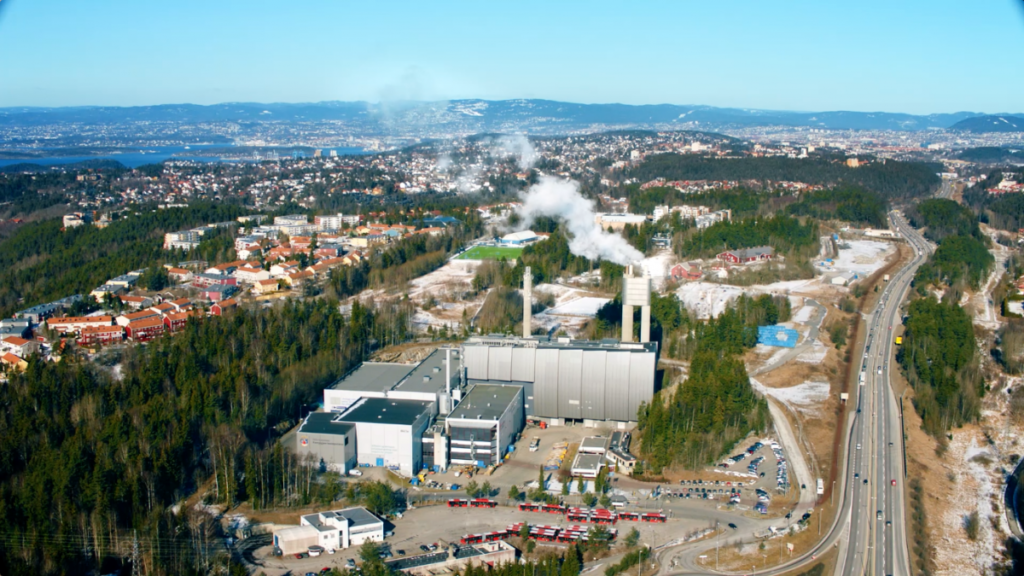
Hafslund Celsio will capture up to 350 000 tonnes of CO2 from their waste-to-energy in Oslo.
Construction began in summer 2022 but was put on hold in spring 2023 due to increased cost estimates. Following an extensive cost-reduction phase and renegotiation of the state support agreement, the project has now resumed. The plant is scheduled to be in operation by the third quarter of 2029, capturing 350,000 tonnes of CO2 annually.
Facts
- Capture of 350 000 tonnes of CO2 per year
- Amine technology
- Includes CO2 cleaning, liquefaction and buffer storage (4 days)
- Delivery of CO2 to Northern Lights at the quay in the port area of Oslo
How?
At Hafslund Celsio residual waste that cannot be recycled is incinerated. The recovered heat produces district heating and electricity for households. By capturing the carbon released during this process, Oslo CCS addresses challenges associated with waste-to-energy activities.
The captured CO2 is shipped to Northern Lights’ receiving terminal in Øygarden, permanently stored beneath the seabed. In cooperation with Northern Lights, Oslo CCS creates a complete CCS value chain in Norway, alongside Brevik CCS capture facility in Brevik.
Negative emissions
Bioenergy with Carbon Capture and Storage (BECCS) is considered one of the most important solutions for achieving negative emissions. Global climate models limiting warming to 1.5 or 2 degrees Celsius, typically rely on large-scale negative emissions. Of the approximately 400,000 tonnes of CO2 emitted annually from the waste-to-energy plant at Klemetsrud, about 60 percent comes from biogenic material. The capture project will therefore remove around 200,000 tonnes of biogenic CO2 from the carbon cycle each year.
“The waste treated at the plant consists of about 60 per cent biogenic carbon.”
Ambitious climate goals
Hafslund Celsio is jointly owned by Hafslund Eco (60%), Infranode (20%) and HitecVision (20%). The company is a leading provider of clean energy, delivering electricity, heating, cooling, and smart solutions to improve resource efficiency. The City of Oslo has ambitious climate targets and requires CO2 capture at the waste-to-energy plant to meet its goals.