

01.10.2026
The entire CCS value chain must be considered as one system
Experience from Knowledge Sharing 2026 shows that costs and risks in CCS projects often arise at the interfaces between capture, transport and storage. For new projects to succeed, the entire value chain needs to be planned and developed as one integrated system.
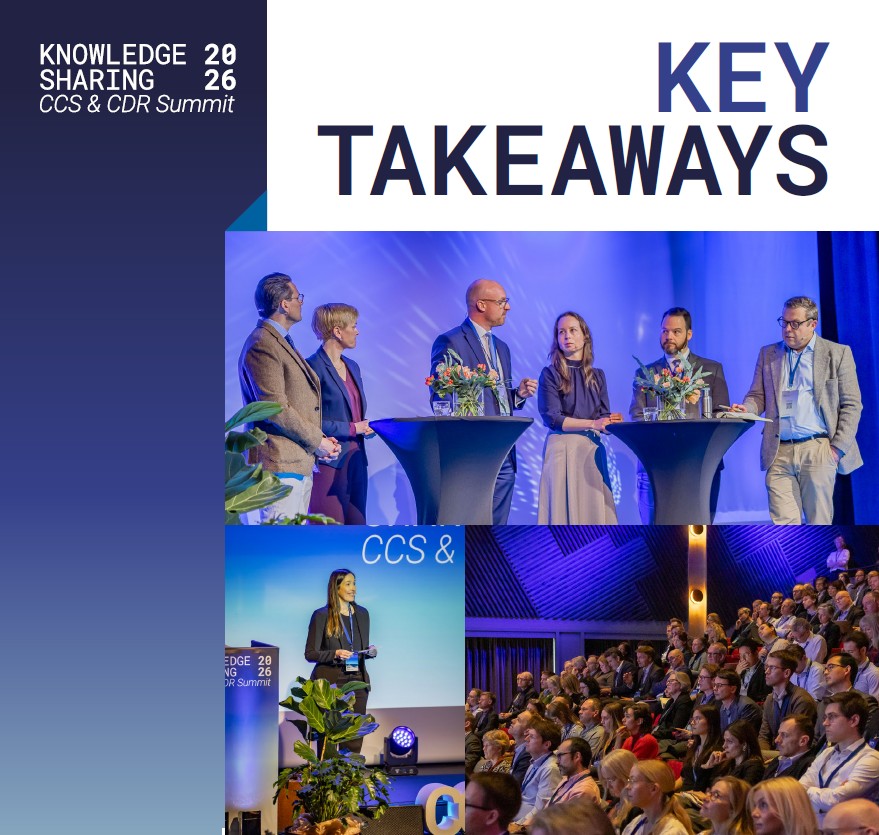
Knowledge Sharing 2026, CCS & CDR Summit
A clear lesson from Knowledge Sharing 2026, CCS & CDR Summit is that CCS should not be developed as a series of separate assets. Decisions related to capture, CO2 conditioning, transport and storage affect one another.
If assumptions are not aligned, consequences might propagate through the value chain, increasing costs and delays. The report highlights need for clear ownership of interfaces. Also strong coordination between actors from an early stage of project development.
Lessons from Longship
Experience from Longship features prominently in the report. The project was established to demonstrate full-chain CCS at large scale while generating knowledge that can reduce cost and risk in future projects.
The development of Longship has also provided experience in managing responsibilities and interfaces between several independent actors.
Gassnova has acted as project integrator in Longship, while the industrial partners have retained responsibility for executing their respective projects. The integrator role has included facilitating a common design basis, coordinating schedules and decision gates, and structuring requirements and cooperation on experience sharing.
Experience from Brevik CCS and Oslo CCS also demonstrates the challenges involved in integrating CO2 capture into existing industrial facilities. Limited space, complex interfaces with existing processes, energy integration and the need to maintain continued operations can increase execution risk.
Maturity before execution
Another important lesson is the need for sufficient project maturity before entering the execution phase.
The report highlights high FEED maturity and strict control of scope and changes as important prerequisites for protecting cost, schedule and commissioning performance.
Operational readiness should also be established early. Experience shows that many technical and schedule challenges may materialise late – when capture, transport and storage systems are tested together and handed over to operations.
Experience gained through Longship provides concrete knowledge about where risks arise in a full CCS value chain, and how future projects can manage them more effectively.